Wildpulse Map
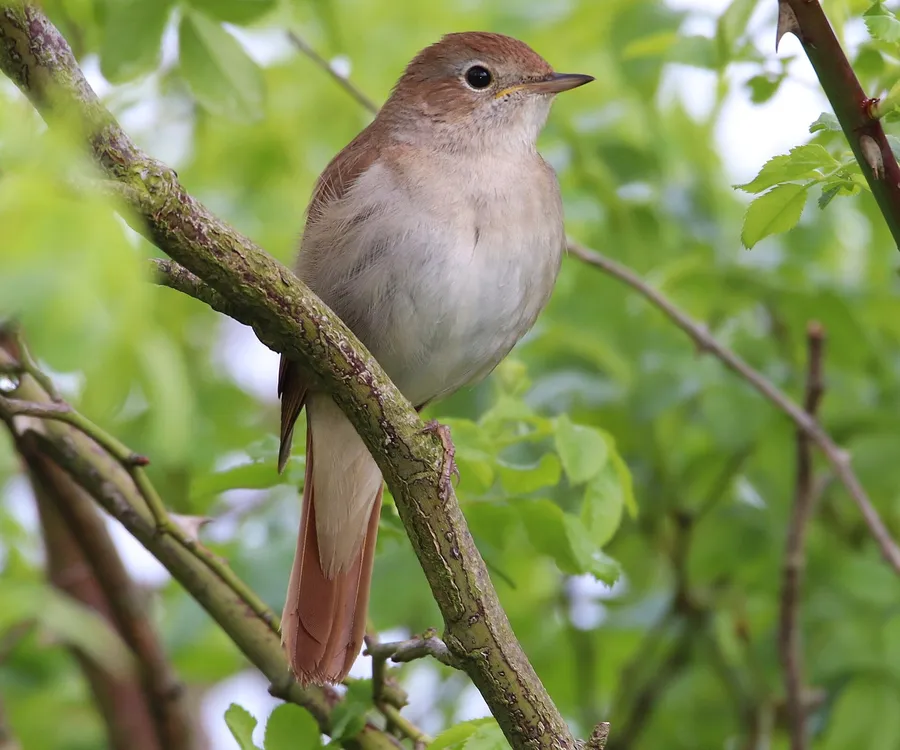
Photo: Common Nightingale

Common Nightingale

Luscinia megarhynchos

The nightingale is a plain, brown songbird with a reddish tail, slightly larger than a European robin. Shy and secretive, it keeps to dense thickets at woodland edges, in damp ground and in copses across Europe, western Asia and North Africa, and winters in tropical Africa. It feeds on insects, worms and caterpillars, and mainly on berries in late summer. It is famous for its powerful, varied song, which unpaired males deliver especially at night in spring and which many people rank among nature's loveliest sounds.

In our data the species was reported on 353,945 days in 97 countries, most often in France, Spain and Germany.

Last reported on October 18, 2026 in Norway (Rogaland)

View on the map

Photo: Warrieboy, CC BY-SA 4.0

Size and way of life

Wingspan
24 cmfrom wingtip to wingtip

Where the species lives and is reported

Drag to turn the globe

Where it is reported

Most reports come from Europe (94 %) and from Asia (5 %).

Counted are reporting days: days on which the species was reported at least once in a cell.

Where it was reported

Each hexagon is a cell about 40 km across in which people reported the species. The darker, the more days.

  • 353,945reporting days
  • 3,817cells
  • 97countries

Where it stays pale, few reports come in. That does not mean the species is absent there. The latest reports pulse:

  • Rogaland, Norway
  • West Sussex, United Kingdom
  • Haute-Garonne, France
  • Community of Madrid, Spain

Where it is reported most often

For each country, the place where the species was reported on the most days. Tap a place.

This is no promise. It shows where people report it especially often.

Through the year

The species is most likely to be reported in May (265 % more often than the yearly average), least often in December (99 % less often). The bars show the difference from the yearly average, adjusted for the fact that more people are outdoors in summer. On the map, a cell is darker the more of its reports fall in the month shown.

January: 91 % less often than the yearly average.

When is the species reported where?

Green means: in this month the species is reported there clearly more often than in the rest of the year. Blue means: clearly less often. We have adjusted for the fact that more people are outdoors in summer. Tap a square.

How often the species is reported per country and month, compared with the yearly average
CountryJFMAMJJASOND
All countriesreported 91 % less often than the yearly averagereported 99 % less often than the yearly averagereported 86 % less often than the yearly averagereported 2.8 times as often as the yearly averagereported 3.6 times as often as the yearly averagereported 2.1 times as often as the yearly averagereported 22 % less often than the yearly averagereported 15 % less often than the yearly averagereported 67 % less often than the yearly averagereported 96 % less often than the yearly averagereported 98 % less often than the yearly averagereported 99 % less often than the yearly average
Francereported 79 % less often than the yearly averagereported 100 % less often than the yearly averagereported 96 % less often than the yearly averagereported 2.9 times as often as the yearly averagereported 3.8 times as often as the yearly averagereported 2.2 times as often as the yearly averagereported 36 % less often than the yearly averagereported 28 % less often than the yearly averagereported 78 % less often than the yearly averagereported 99 % less often than the yearly averagereported 100 % less often than the yearly averagereported 100 % less often than the yearly average
Spainreported 99 % less often than the yearly averagereported 100 % less often than the yearly averagereported 80 % less often than the yearly averagereported 2.6 times as often as the yearly averagereported 3.1 times as often as the yearly averagereported 2.2 times as often as the yearly averagereported 26 % more often than the yearly averagereported 35 % more often than the yearly averagereported 46 % less often than the yearly averagereported 96 % less often than the yearly averagereported 100 % less often than the yearly averagereported 100 % less often than the yearly average
Germanyreported 99 % less often than the yearly averagereported 100 % less often than the yearly averagereported 99 % less often than the yearly averagereported 2.6 times as often as the yearly averagereported 5 times as often as the yearly averagereported 2.2 times as often as the yearly averagereported 54 % less often than the yearly averagereported 77 % less often than the yearly averagereported 97 % less often than the yearly averagereported 100 % less often than the yearly averageno reportsreported 100 % less often than the yearly average
Portugalreported 93 % less often than the yearly averagereported 99 % less often than the yearly averagereported 65 % less often than the yearly averagereported 3.1 times as often as the yearly averagereported 3.3 times as often as the yearly averagereported 77 % more often than the yearly averagereported 19 % less often than the yearly averagereported 23 % more often than the yearly averagereported 38 % less often than the yearly averagereported 95 % less often than the yearly averagereported 100 % less often than the yearly averageno reports
Italyreported 100 % less often than the yearly averageno reportsreported 91 % less often than the yearly averagereported 2.7 times as often as the yearly averagereported 3.1 times as often as the yearly averagereported 2.1 times as often as the yearly averagereported 15 % less often than the yearly averagereported 34 % less often than the yearly averagereported 63 % less often than the yearly averagereported 99 % less often than the yearly averagereported 100 % less often than the yearly averageno reports
Turkeyreported 100 % less often than the yearly averagereported 100 % less often than the yearly averagereported 88 % less often than the yearly averagereported 2.5 times as often as the yearly averagereported 3.1 times as often as the yearly averagereported 2.1 times as often as the yearly averagereported 35 % less often than the yearly averagereported 53 % less often than the yearly averagereported 79 % less often than the yearly averagereported 98 % less often than the yearly averagereported 100 % less often than the yearly averageno reports
Belgiumreported 97 % less often than the yearly averagereported 94 % less often than the yearly averagereported 98 % less often than the yearly averagereported 3.4 times as often as the yearly averagereported 4.9 times as often as the yearly averagereported 93 % more often than the yearly averagereported 62 % less often than the yearly averagereported 57 % less often than the yearly averagereported 91 % less often than the yearly averagereported 99 % less often than the yearly averageno reportsno reports
United Kingdomreported 73 % less often than the yearly averagereported 99 % less often than the yearly averagereported 98 % less often than the yearly averagereported 3.5 times as often as the yearly averagereported 4.7 times as often as the yearly averagereported 48 % more often than the yearly averagereported 63 % less often than the yearly averagereported 67 % less often than the yearly averagereported 94 % less often than the yearly averagereported 97 % less often than the yearly averagereported 99 % less often than the yearly averagereported 100 % less often than the yearly average
much less oftenless oftenno clear differencemore oftenmuch more often

In France in May: reported 3.8 times as often as the yearly average. This is the strongest month there.

Who is reported in the same cells

In how many of 10 areas of this species the other species was reported as well. Counted are the 2,785 cells in which this species is reported regularly; compared with the other species that have a page.

Latest reports on the map

The map shows every cell with reports of this species, including the latest ones, and every other species as well.

View the Common Nightingale on the map