Where it is reported
Most reports come from Europe (76 %), from Asia (16 %) and from Africa (7 %).
Counted are reporting days: days on which the species was reported at least once in a cell.
 Wildpulse Map
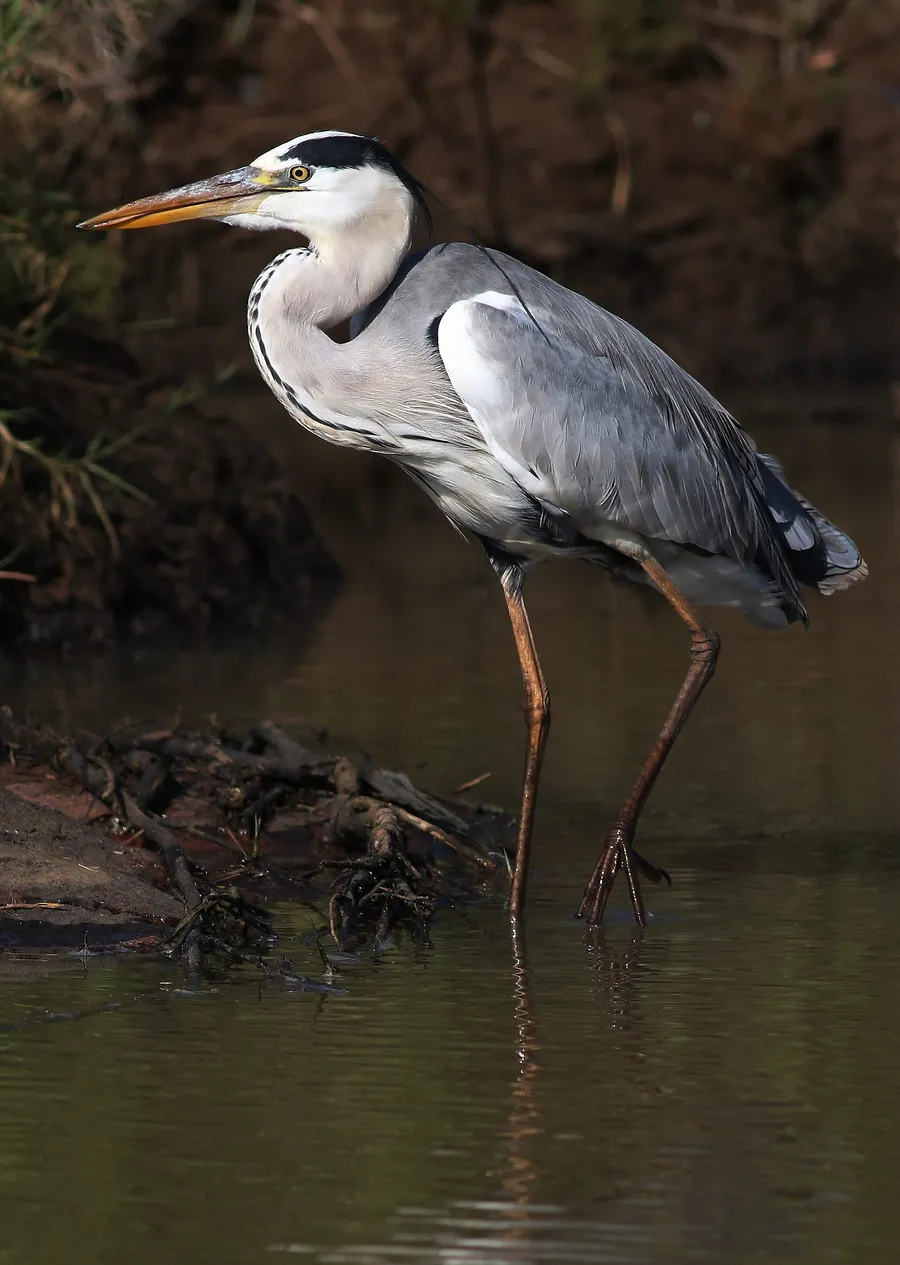
Ardea cinerea
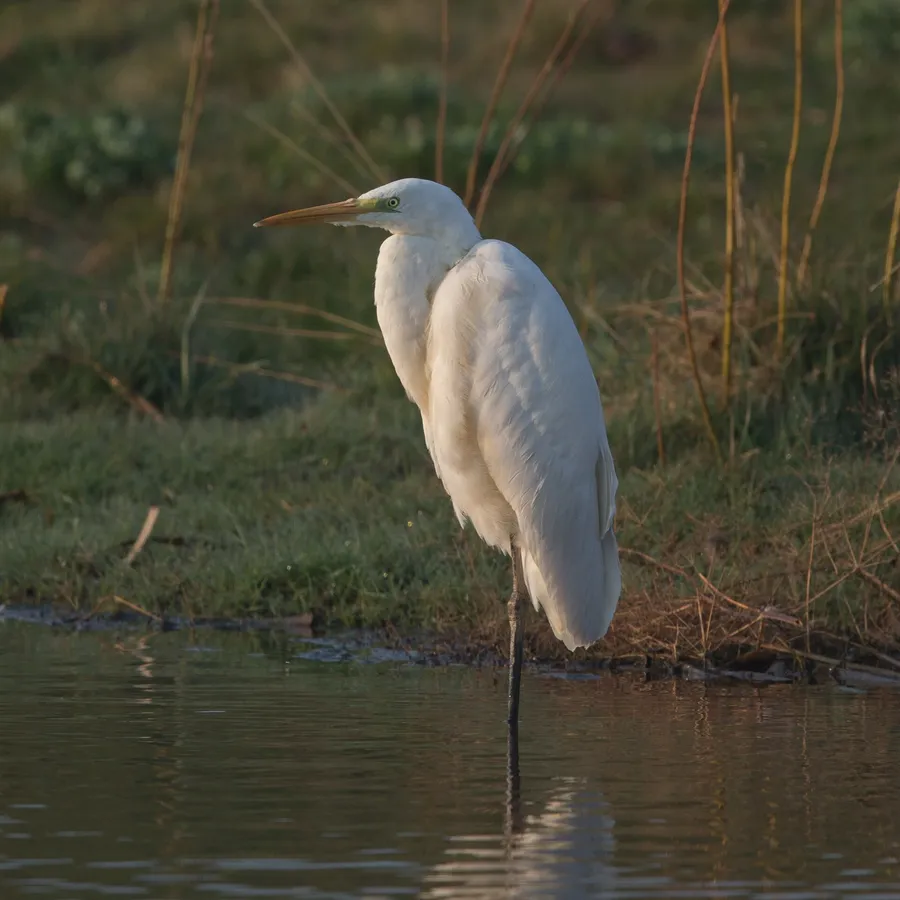
The grey heron is a tall wading bird with a grey back, white head and neck, and a broad black stripe running from the eye to its crest. It is found across Europe, Asia and most of Africa wherever there is water. Standing motionless in the shallows, it waits for fish, frogs, crustaceans and insects to come within reach of its long bill, and it also takes water voles, rats and young rabbits. It nests in colonies, usually high in trees, and flies slowly with its neck folded back in an S-shape.
In our data the species was reported on 2,630,958 days in 167 countries, most often in Sweden, the United Kingdom and France.
Last reported on November 22, 2026 in Italy (Bergamo)
Photo: Derek Keats from Johannesburg, South Africa, CC BY 2.0
The area of each dot matches the weight.
Most reports come from Europe (76 %), from Asia (16 %) and from Africa (7 %).
Counted are reporting days: days on which the species was reported at least once in a cell.
Each hexagon is a cell about 40 km across in which people reported the species. The darker, the more days.
Where it stays pale, few reports come in. That does not mean the species is absent there. The latest reports pulse:
For each country, the place where the species was reported on the most days. Tap a place.
This is no promise. It shows where people report it especially often.
The species is most likely to be reported in September (15 % more often than the yearly average), least often in June (21 % less often). The bars show the difference from the yearly average, adjusted for the fact that more people are outdoors in summer. On the map, a cell is darker the more of its reports fall in the month shown.
January: about as often as the yearly average.
Green means: in this month the species is reported there clearly more often than in the rest of the year. Blue means: clearly less often. We have adjusted for the fact that more people are outdoors in summer. Tap a square.
| J | F | M | A | M | J | J | A | S | O | N | D | |
|---|---|---|---|---|---|---|---|---|---|---|---|---|
| All countries | ||||||||||||
| Sweden | ||||||||||||
| United Kingdom | ||||||||||||
| France | ||||||||||||
| Germany | ||||||||||||
| Spain | ||||||||||||
| Norway | ||||||||||||
| India | ||||||||||||
| South Africa |
In Sweden in August: reported 39 % more often than the yearly average. This is the strongest month there.
In how many of 10 areas of this species the other species was reported as well. Counted are the 10,477 cells in which this species is reported regularly; compared with the other species that have a page.
The map shows every cell with reports of this species, including the latest ones, and every other species as well.
View the Grey Heron on the map