Wildpulse Map
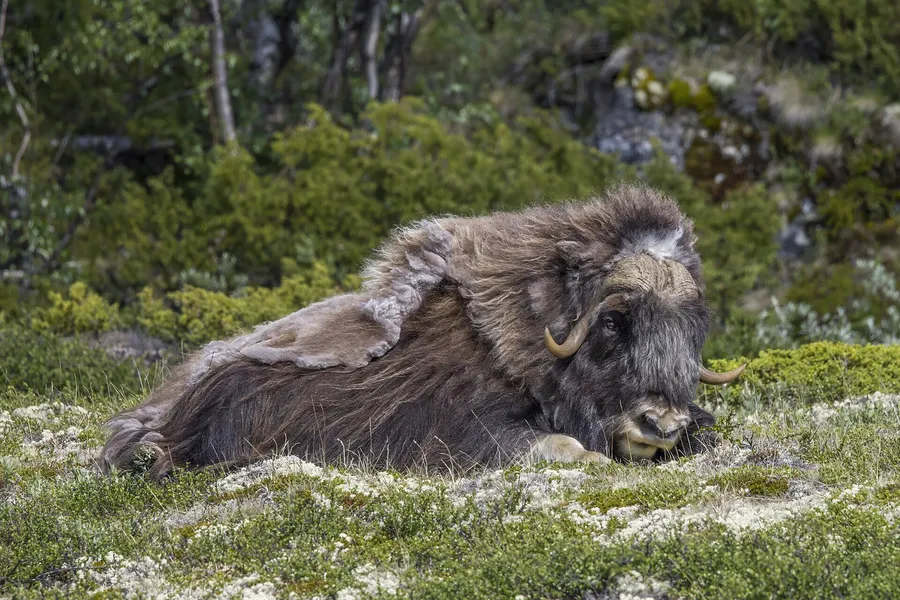
Photo: Muskox

Muskox

Ovibos moschatus

The muskox is a stocky Arctic hoofed mammal whose shaggy coat hangs down nearly to the ground; both sexes carry heavy, curved horns with upturned tips. Despite its name its closest relatives are sheep and goats rather than cattle. Its native range is now limited to the tundra of Greenland and Canada, and it has been reintroduced to Alaska, Siberia and Norway. It eats grasses, willow leaves, lichens and mosses. When wolves attack, the adults form a ring facing outward with the calves sheltered inside.

In our data the species was reported on 2,596 days in 5 countries, most often in Norway, Canada and Greenland.

Last reported on September 29, 2026 in Norway (Sør-Trøndelag)

View on the map

Photo: Charles J. Sharp, CC BY-SA 4.0

Size and way of life

Size comparison: Muskox, head-and-body length 2.3 m, next to a person 1.75 m tall.50 cm1 m1.5 m 2.3 m1.75 m
Head and body, average for adults. The outline is scaled to this length and only approximate. The person next to it is 1.75 m tall.
Weight
312 kgaverage for adults
Length
2.3 mhead and body, without tail
Young
1 youngper litter, after a gestation of 8 months
Maximum age
27 yearsoldest recorded age

From birth to old age

  1. 11 kgat birth
  2. 62 kgat 7 months, when the young are weaned
  3. 312 kgfully grown; able to breed at 3 years
  4. 27 yearsoldest recorded age

The area of each dot matches the weight.

Where the species lives and is reported

Drag to turn the globe
Country where it occurs

Where the species is at home

Tinted green are the 3 countries where the species occurs according to the scientific literature.

Country list: Mammal Diversity Database.

Where it was reported

Each hexagon is a cell about 40 km across in which people reported the species. The darker, the more days.

  • 2,596reporting days
  • 105cells
  • 5countries

Where it stays pale, few reports come in. That does not mean the species is absent there. The latest reports pulse:

  • Sør-Trøndelag, Norway
  • Northeast Greenland National Park, Greenland
  • Nunavut, Canada
  • Sermersooq, Greenland

Where it is reported most often

For each country, the place where the species was reported on the most days. Tap a place.

This is no promise. It shows where people report it especially often.

Through the year

The species is most likely to be reported in June (44 % more often than the yearly average), least often in September (30 % less often). The bars show the difference from the yearly average, adjusted for the fact that more people are outdoors in summer. On the map, a cell is darker the more of its reports fall in the month shown.

January: 41 % more often than the yearly average.

When is the species reported where?

Green means: in this month the species is reported there clearly more often than in the rest of the year. Blue means: clearly less often. We have adjusted for the fact that more people are outdoors in summer. Tap a square.

How often the species is reported per country and month, compared with the yearly average
CountryJFMAMJJASOND
All countriesreported 41 % more often than the yearly averagereported about as often as the yearly averagereported 24 % less often than the yearly averageno clear difference from the yearly averagereported 35 % more often than the yearly averagereported 44 % more often than the yearly averagereported 20 % more often than the yearly averageno clear difference from the yearly averagereported 30 % less often than the yearly averagereported 28 % less often than the yearly averageno clear difference from the yearly averageno clear difference from the yearly average
Norwayno clear difference from the yearly averageno clear difference from the yearly averageno clear difference from the yearly averageno clear difference from the yearly averagereported 43 % more often than the yearly averagereported 46 % more often than the yearly averageno clear difference from the yearly averagereported 17 % less often than the yearly averagereported 33 % less often than the yearly averageno clear difference from the yearly averagereported about as often as the yearly averageno clear difference from the yearly average
Canadareported about as often as the yearly averageno clear difference from the yearly averageno clear difference from the yearly averageno clear difference from the yearly averageno clear difference from the yearly averageno clear difference from the yearly averagereported about as often as the yearly averagereported about as often as the yearly averageno clear difference from the yearly averageno clear difference from the yearly averageno clear difference from the yearly averageno clear difference from the yearly average
Greenlandreported about as often as the yearly averageno clear difference from the yearly averageno clear difference from the yearly averageno clear difference from the yearly averageno clear difference from the yearly averageno clear difference from the yearly averagereported about as often as the yearly averageno clear difference from the yearly averageno clear difference from the yearly averageno clear difference from the yearly averageno clear difference from the yearly averageno clear difference from the yearly average
USAno clear difference from the yearly averageno clear difference from the yearly averageno clear difference from the yearly averageno clear difference from the yearly averageno clear difference from the yearly averageno clear difference from the yearly averagereported about as often as the yearly averagereported about as often as the yearly averageno clear difference from the yearly averageno clear difference from the yearly averageno clear difference from the yearly averageno clear difference from the yearly average
much less oftenless oftenno clear differencemore oftenmuch more often

In Norway in June: reported 46 % more often than the yearly average. This is the strongest month there.

Who is reported in the same cells

In how many of 10 areas of this species the other species was reported as well. Counted are the 26 cells in which this species is reported regularly; compared with the other species that have a page.

Latest reports on the map

The map shows every cell with reports of this species, including the latest ones, and every other species as well.

View the Muskox on the map